


Acrylic Screenprint Mixed Media Art, Made by Hand
A face flashes past on a phone screen, a classic car catches the eye in traffic, an old pop icon suddenly feels current again. Acrylic screenprint mixed media art takes that fast, digital visual language and gives it weight, surface, and staying power. It turns an image you might scroll past in a second into a physical work that asks you to stop and look.
That shift matters. A screen is flat, backlit, and endlessly replaceable. A canvas carries paint, pressure, imperfect edges, and decisions made by hand. When acrylic paint and screenprint meet in one work, the result can be clean and graphic, but never sterile. It holds the energy of pop culture while remaining unmistakably original.
What Acrylic Screenprint Mixed Media Art Actually Means
The term sounds technical, but the idea is straightforward. It describes artwork that combines acrylic paint with screenprinted layers and, often, other visual elements such as collage, drawing, transfers, or digitally developed source imagery. The important part is not simply that several techniques appear in one piece. It is how they create tension between control and accident.
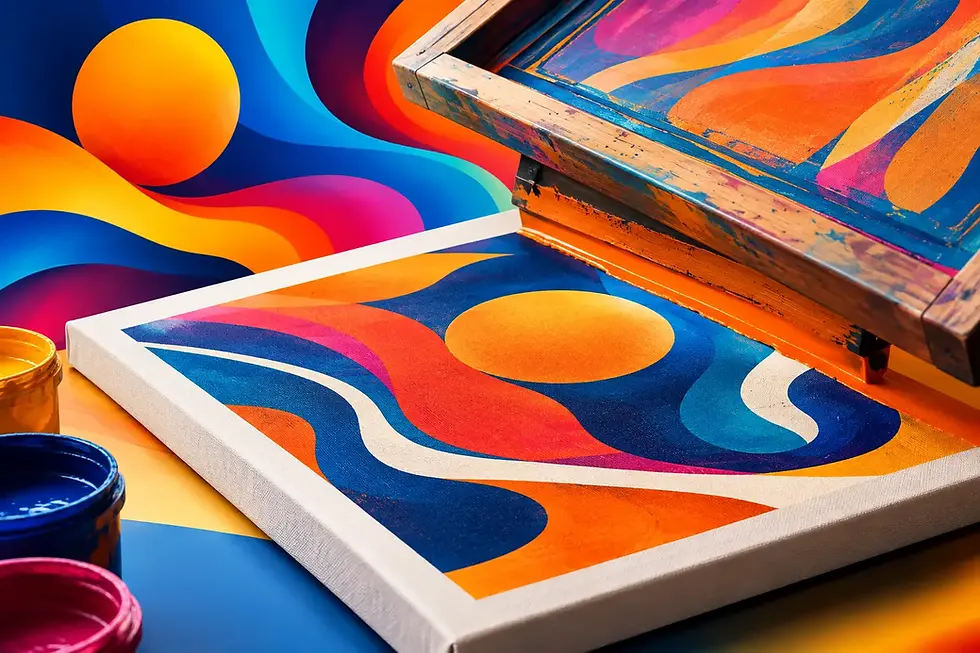
Screenprinting brings precision. A prepared image is transferred through a mesh screen, one color or layer at a time. It can preserve a sharp portrait, a bold type fragment, a photographic detail, or a graphic pattern with a directness that brushes alone rarely achieve.
Acrylic changes the temperature of that image. It can be applied in broad fields of color, transparent washes, rough strokes, drips, or dense painted areas. It can hide parts of the print, pull an image forward, or make it feel as if it is fading out of memory. The canvas becomes more than a surface for reproduction. It becomes a place where the image is challenged and rebuilt.
That is the difference between a printed picture and a mixed media artwork. One repeats an image. The other gives it a new physical identity.
Why This Technique Has So Much Presence
A strong work does not need to shout just because it uses bright color or a famous face. Its presence comes from layers that reveal themselves over time. From a distance, you may see the portrait, the car, or the central motif. Up close, you notice the grain of the screenprint, the opacity of the acrylic, a scraped edge, or a color that deliberately breaks the image apart.
That makes this kind of art especially compelling in spaces that need a focal point. A neutral living room, a modern office, a lobby, or a creative studio can all benefit from a piece with a clear visual signal. It gives the room a point of view without needing to match every cushion, chair, or wall color.
There is also an emotional reason these works connect. Pop-cultural images arrive with their own baggage: music, films, speed, rebellion, glamour, loss, childhood, ambition. A familiar subject can open the door, but the artistic treatment determines whether the work stays with you. The best pieces do not depend on recognition alone. They use recognition as material.
From Digital Source to Physical Canvas
Much of contemporary visual culture starts online. Images are cropped, reposted, filtered, enlarged, and forgotten at remarkable speed. For an artist, that flood is not just noise. It is a visual archive of our time.
The work begins with selection. Which image has enough tension? Which expression, gesture, silhouette, or color relationship can carry a large canvas? A good source image is not automatically a good artwork. It needs to be reduced, altered, reframed, and pushed into a new visual language.
Then comes the physical process. Image layers may be developed for screens, colors are mixed, and the canvas is built up through paint and print. Some elements need to land with exact clarity. Others should break, overlap, or disappear under later layers. This is where handwork matters most. Every pass changes the balance of the whole piece.
Acrylic dries quickly, which keeps the process active. Decisions cannot always wait until tomorrow. A color can either electrify a portrait or flatten it. A printed layer can bring rhythm or become too literal. The painter has to know when to add and when to leave the canvas alone.
At Carsten Breuer Arts, this translation from digital image worlds into large-format, handmade work is central to the practice. The goal is not to imitate the look of a screen. It is to give familiar visual fragments friction, color, and a new kind of permanence.
Acrylic Screenprint Mixed Media Art Is Not Just Decoration
Art belongs in a room, so it should work with the room. But buying only to fill an empty wall usually leads to safe choices that become invisible after a few weeks. A mixed media canvas should do more. It should add character, create a pause, and start a conversation without needing an explanation card beside it.
This is particularly true for portraits and iconic subjects. They bring immediate human energy into an interior. A sharply rendered face can feel confrontational, glamorous, cool, or vulnerable depending on the color, crop, and layers around it. Automotive motifs can bring movement and design history. Abstract graphic passages can keep a recognizable subject from becoming predictable.
Scale is part of the effect. A small work can be intimate and precise. A larger canvas can take command of a wall and alter the entire atmosphere of a space. Neither is automatically better. It depends on viewing distance, wall area, furniture, and how much visual intensity you want in the room.
What to Look for Before You Buy
Start with the work itself, not with a trend. Ask whether you would still want to live with the image after its first impact fades. A piece can be loud and still have depth. It can be restrained and still have force. The answer is personal, but your first reaction should be more than, “This matches.”
Look closely at the relationship between print and paint. Are the printed layers merely sitting on top of the canvas, or do they interact with the painted marks? Does the image have rhythm? Are there areas that reward a closer look? In well-made mixed media art, the surface has intention. It does not feel busy for the sake of being busy.
Originality also deserves a clear question. Is this a unique original canvas, a limited screenprint edition, or a reproduction? Each can have value, but they are not the same thing. An original carries the singular decisions of its making. A limited edition can make a particular motif more accessible while retaining a defined, collectible format. What matters is transparency about what you are acquiring.
Finally, consider the artist’s visual language. A single work may catch your attention, but a consistent body of work tells you more. It shows whether the artist has a recognizable perspective or simply follows whatever image is popular at the moment. Style is not a logo stamped onto a canvas. It is the accumulation of choices repeated with conviction.
The Value of Imperfection
Screenprint is often associated with clean repetition, while painting is associated with expressive gesture. Mixed media art becomes interesting when those expectations collide. A slightly uneven ink edge, a painted interruption, a shifted color, or an area left exposed can make the work feel alive.
These are not flaws to be corrected out of existence. They are evidence that a real process took place. They separate the work from the frictionless perfection of digital imagery. In a culture full of polished files, an actual painted surface has its own authority.
That does not mean every mark is meaningful. Randomness is not depth. The strongest works use accidents with discipline. They leave room for surprise, but they are guided by composition, color sense, and a clear decision about what the image needs.
Give the Work Enough Room to Speak
When you choose acrylic screenprint mixed media art, do not bury it among too many competing objects. Give it breathing room and proper light. Avoid harsh direct sun, which can affect color over time, and avoid placing a large work so high that it becomes background architecture instead of something you can actually encounter.
Choose the piece that keeps pulling you back, then let it claim its place. Good art does not need to politely disappear into a room. It should make the room feel more like yours.


Kommentare