


A Guide to Commissioning Custom Portraits
A custom portrait is not a decorative afterthought. It is a decision to give a person, a memory, or an attitude a permanent place on the wall. This guide to commissioning custom portraits is for people who want more than a technically accurate face. You are looking for a work with character, material presence, and a point of view.
The strongest commissions do not begin with the question, “Can you paint this photo?” They begin with a clearer one: “What should this portrait make me feel every time I see it?” That answer shapes everything that follows, from the artist and source image to the format, color, and level of abstraction.
Start With the Person Behind the Portrait
A good commission depends on fit. Every artist has a visual language: precise or raw, quiet or loud, realistic or reduced, polished or deliberately fractured. The goal is not to find someone who can reproduce every detail. It is to find an artist whose existing work gives your subject more force.
Look closely at how the artist handles faces. Are the portraits driven by gesture, graphic contrast, bold color, collage, screen print layers, or painterly marks? Do the works feel intimate, iconic, provocative, or calm? If you want a portrait with pop-cultural edge and large-scale visual impact, a restrained classical painter may be the wrong choice, even if the craftsmanship is excellent.
This is also where direct contact matters. Commissioning from an artist is different from ordering a personalized product. You are asking for an original interpretation, built through a real process of selection, painting, revision, and material decisions. That is precisely what gives the finished work its value.
Choose style over literal resemblance
There is a trade-off worth accepting early: the more room an artist has for their own hand, the more distinctive the final work can become. A portrait that copies a photograph perfectly may be impressive, but it can also remain trapped in the logic of the photo.
A strong contemporary portrait takes the subject somewhere else. It may sharpen a glance, remove visual noise, exaggerate contrast, fragment the background, or use color to bring out a personality that the camera did not catch. Resemblance matters, especially with people close to you. But presence matters more.
Prepare Reference Images That Give the Artist Something to Work With
A commission can only be as strong as the visual material behind it. One dark, low-resolution phone photo is rarely enough, particularly for a large canvas. Send several images whenever possible: a clear front-facing image, a few angles, close-ups of the eyes, and photos that show the person’s typical expression.
The best reference is not always the most formal one. A slightly imperfect photograph can carry more life than a stiff studio portrait. Think about what makes the subject recognizable to you. Is it a raised eyebrow, a certain posture, a leather jacket, a laugh, a direct stare? Those details can become more valuable than flawless lighting.
Be honest about what cannot be changed. If a photo is heavily filtered, blurred, or overexposed, the artist needs to know whether you want the image translated as it is or whether they should work from its mood and reconstruct the missing information. This is not a problem if discussed early. It becomes a problem only when expectations stay vague.
Share the story, not only the files
A few sentences of context can change the direction of a portrait. Explain who the person is, why the work matters, and where it will hang. A portrait of a founder in a creative office calls for a different energy than a piece honoring a parent, a musician, or a personal milestone.
You do not need to write an emotional essay. Just give the artist the material that no image file contains. Is this person fearless, funny, private, restless, stylish, rebellious? Does a particular era, song, city, car, or color belong to their story? These references can inform the composition without turning the work into a literal collage of symbols.
Decide on Size Before You Decide on Price
Scale is not a technical detail. It changes how a portrait behaves in a room. A small work invites close viewing. A large-format canvas takes command from across the space. Neither is automatically better, but the setting should lead the decision.
Measure the wall, then step back. In a living room with generous ceiling height, a modest portrait can disappear. In a narrow hallway, an oversized canvas may feel crowded. Consider the furniture below it, the distance from which people will see it, and the amount of daylight on the wall.
If the portrait is meant to be a focal point, give it room to breathe. A bold work placed between busy shelves, competing prints, or heavy décor loses some of its impact. Contemporary portrait art often works best when it is allowed to speak clearly.
Original, edition, or study?
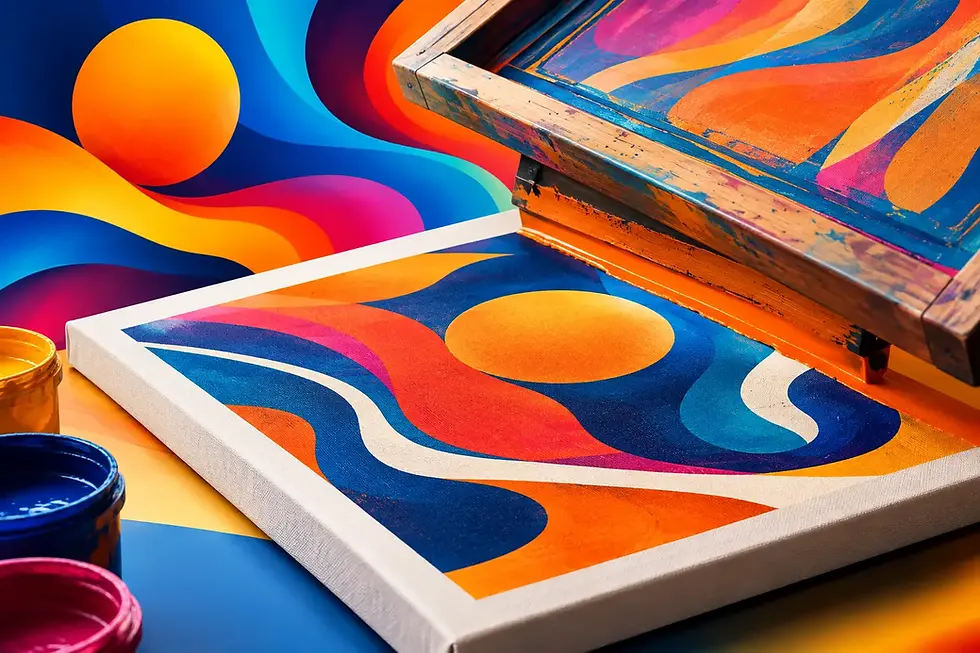
If budget is part of the conversation, discuss formats openly. An original painting offers singularity, surface, and the physical trace of the artist’s hand. That can mean visible brushwork, layered acrylic, screen print textures, and small irregularities that make the work unmistakably one of one.
A limited edition can be a smart alternative when the artist offers one, especially if you are drawn to a particular image or visual language but do not need a fully individual composition. A smaller painted study may also make sense for an intimate space. The right choice depends on whether you are commissioning a personal statement, starting a collection, or solving a specific interior decision.
Agree on Direction, Then Avoid Micromanaging
The clearest commission brief covers the essentials: subject, desired mood, approximate palette, size, medium, placement, deadline, and budget. It should also state what you do not want. If you dislike overly sweet, photographic, monochrome, or decorative results, say so before work begins.
After that, leave space. Giving an artist a reference is necessary. Dictating every line, shadow, and color adjustment is usually counterproductive. You chose that artist because their visual decisions interested you. If the work must follow a fixed corporate template or reproduce a photo without interpretation, a print service may be a more honest fit.
A professional artist should explain the process upfront. Ask when you will see a concept or preliminary direction, how feedback is handled, and at which point changes are no longer practical. Major compositional changes are easy before painting starts and expensive after multiple layers have been built. Clear checkpoints protect both sides.
Talk About Color Like It Belongs to the Room
Many people say they want a portrait that “matches” their interior. That is understandable, but matching can become timid. A portrait does not need to repeat the color of the sofa or carpet to belong in the room. Often, a strong contrast gives the space its identity.
Instead, share images of the wall and surrounding furniture. Mention colors you love and colors you cannot live with. An artist can then decide whether the work should echo the room, cut through it with a bright accent, or create a darker, more concentrated counterweight.
This is especially relevant with portraiture. Skin tones need not be natural to feel convincing. Electric blue, acid yellow, deep red, or black-and-white contrast can reveal emotion and structure in ways a naturalistic palette cannot. The question is not whether the colors are realistic. It is whether they feel right for the subject and the space.
Set a Realistic Timeline and Budget
Original art takes time. Researching the source material, developing a composition, preparing a canvas, building paint layers, drying, finishing, photographing, and arranging delivery are all part of the work. If the portrait is a gift for a birthday, opening, anniversary, or holiday, start the conversation early.
Price is shaped by size, medium, complexity, number of figures, and the artist’s experience. A large portrait with custom screen print elements and multiple painted layers requires more than a simple head-and-shoulders composition. Ask for a clear quote and understand what it includes: concept development, materials, revisions, framing if applicable, shipping, and any installation considerations.
The cheapest option is rarely the best value if you want a work that will stay with you for years. At the same time, the highest price does not automatically guarantee connection. Buy the piece that feels visually right and whose process you understand.
Make the Final Work Part of Your Life
Once the portrait arrives, do not treat it like a fragile trophy. Give it the right light, place it at a considered height, and let it become part of the room’s daily rhythm. The best custom portraits keep changing because you keep changing around them.
At Carsten Breuer Arts, portrait work is built around that tension between a recognizable image and a distinct visual statement: digital references translated into analog paint, screen print, and canvas. That approach is not for every subject or every room. But when the right person, artist, and format come together, the result does more than preserve a face. It gives a wall a pulse.
Bring a clear intention, strong source material, and enough trust for the artist to make the work their own. That is where a commission stops being a request and starts becoming art.


Kommentare