


Where to Buy Pop Art Portrait Paintings
A pop art portrait can change a room faster than any new sofa, light fixture, or paint color. That is exactly why so many buyers start looking to buy pop art portrait paintings when a space feels finished on paper but still flat in real life. The right piece does more than fill a wall. It sets the mood, shows taste, and gives a room a point of view.
That sounds simple, but buying one well is not just a matter of picking a famous face in bright colors. Some works have real presence. Others only have volume. If you want a portrait that still feels right after the first rush of color wears off, you need to look past the obvious.
Buy Pop Art Portrait Paintings With More Than Color
A lot of people think pop art works because it is loud. Sometimes it does. But the pieces that hold attention over time usually have more going on than neon contrast and a recognizable icon. They carry tension between image and surface, between cultural memory and painterly execution.
That matters if you are buying for a living room, office, lobby, or meeting space. In those settings, a portrait has to do two jobs at once. It needs to make an immediate impact from across the room, and it needs to reward a closer look. Flat digital-looking work can be striking for a week. Handled well, a painted pop portrait keeps opening up.
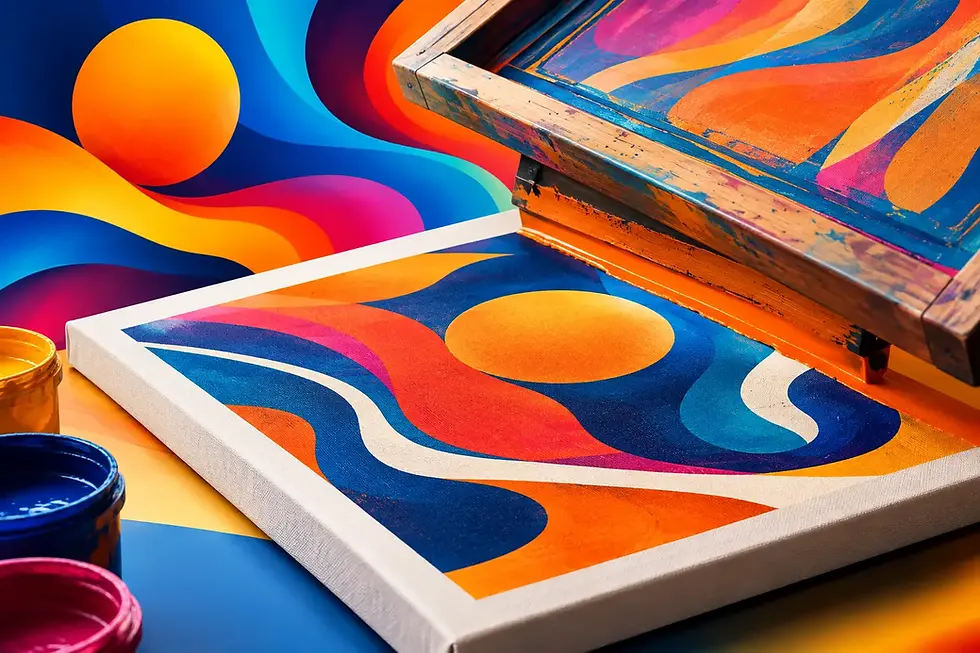
This is where technique matters more than many buyers expect. If a work translates digital imagery into an analog surface with acrylic, brushwork, layered color, or screen print elements, the result often has much more depth than a purely decorative print. You can see the decisions. You can see the hand. That is usually the difference between wall decor and art with staying power.
What Actually Makes a Pop Art Portrait Worth Buying?
If you want to buy pop art portrait paintings with confidence, start with four questions. Not checklist questions for the sake of it - real questions that tell you whether the work will hold up visually, emotionally, and financially.
Is the image only recognizable, or is it interpreted?
A strong pop portrait does not rely only on the fame of the subject. Marilyn, Bowie, Kate Moss, a racing legend, a political figure, or an anonymous face from media culture can all work. But recognition alone is cheap. Interpretation is where value starts.
Look at what the artist is doing with the face. Is the portrait simply repeating an image everybody already knows, or is it shifting the mood through color, cropping, distortion, texture, or contrast? Good pop art does not just quote pop culture. It comments on it, pushes it, or recharges it.
Does the work have physical presence?
Scale, material, and surface matter. A portrait that looks punchy on a screen can feel underwhelming on a wall if it lacks texture or compositional weight. Large-format works often suit pop art especially well because the genre lives from presence. But bigger is not always better. It depends on the room, ceiling height, viewing distance, and what else is happening in the space.
If you are buying for a home, think about how the piece will live with furniture, light, and quiet moments. If you are buying for a business, think about first impressions and how the work reads from different angles. The best choice is not the loudest piece. It is the one that commands the room without fighting it.
Is it original, limited, or open edition?
This is one of the biggest practical differences in the market. Original paintings usually give you the strongest sense of materiality and uniqueness. Limited editions can be a smart entry point if the edition is clearly defined, professionally produced, and tied directly to the artist's practice. Open editions are more accessible, but they rarely carry the same collector appeal.
There is no single right answer here. It depends on why you are buying. If you want a one-off work with visible handwork and maximum individuality, go original. If you want a stronger price-performance balance while still buying something with artistic legitimacy, a limited screen print or edition can make sense. Just make sure the edition is transparent and not artificially dressed up as something rarer than it is.
Do you trust the artist behind the work?
This question gets overlooked because buyers often focus on the image first. But especially in contemporary art, the artist's credibility matters. Not in a stiff, gallery-snob way. In a practical way.
You want to know whether there is a clear artistic voice, a traceable body of work, and a real commitment behind the piece. Exhibition history, awards, fair participation, and a consistent visual language all help. So does direct communication. Buying from an artist with an established practice often gives you more transparency than buying through an anonymous resale or mass marketplace.
Where Most Buyers Get It Wrong
The most common mistake is buying a pop art portrait because it matches the room for now. That usually leads to safe choices disguised as bold ones. The work may fit the cushions, but it does not say much. Six months later, it starts to feel generic.
The second mistake is assuming that all pop portraiture is basically the same. It is not. Some work leans more graphic and design-driven. Some is rawer and more painterly. Some uses celebrity culture as an entry point. Some is more interested in memory, media overload, provocation, or identity. If you skip these differences, you end up comparing pieces only by color and price.
The third mistake is treating online presentation as the whole story. Good photography helps, but it can flatten material nuance. Ask about dimensions, media, edition details, framing, and surface. A serious artist or platform should be able to explain exactly what you are looking at.
How to Buy Pop Art Portrait Paintings That Fit Your Space
Start with the wall, not the genre. Measure it. Look at sightlines. Think about whether you want one dominant work or a piece that supports an existing interior concept.
Then think about emotional temperature. Some portraits energize a room. Others add edge, irony, glamour, nostalgia, or a kind of visual friction. That is not decoration talk. It is what determines whether the piece becomes part of daily life or just a statement you stop noticing.
In a private setting, many buyers want a work that reflects something personal - a connection to music, film, fashion, motorsport, rebellion, or a certain era. In a business setting, the question is slightly different. You are choosing a visual signal. A strong pop portrait can say creative, bold, independent, cultured, or internationally minded without a word being spoken.
That is also why buying directly from a working artist can be such a strong option. You are not just buying an image. You are buying into a process, a point of view, and a more transparent relationship to the work. On https://www.carsten-breuer.de, that direct access is part of the appeal: not gallery distance, but a clear line between the artist, the work, and the buyer.
Price, Value, and the Question Nobody Likes Asking
Yes, price matters. But with art, cheap and expensive are often the wrong categories. Better questions are: what are you actually getting, how distinct is the work, and will it still matter to you in three years?
An original portrait painting costs more for good reasons - time, scale, material, singularity, and the artist's standing. A limited edition may offer a more accessible route without giving up artistic substance. What matters is that the pricing feels coherent with the body of work and the level of execution.
If a piece feels suspiciously cheap, there is usually a reason. If it feels expensive, that does not automatically make it valuable. Value sits somewhere between artistic quality, authenticity, scarcity, and your own conviction that this is not a placeholder purchase.
Buy With Your Eye, But Also With Your Nerve
The best pop art portraits are not timid. They carry attitude. That is part of why people buy them. So if you are choosing between a piece that feels easy and one that stays in your head, the second one is often the better bet.
Not always. Some interiors need restraint. Some buyers want one sharp accent rather than a visual takeover. It depends on your space and your threshold for intensity. But in general, memorable art is rarely the piece you forgot five minutes after seeing it.
A good portrait should keep giving something back - through surface, contradiction, expression, memory, or sheer force. If it does that, it earns its place. And if you are going to live with it every day, that is the standard worth keeping.
When you buy, do not ask only whether the painting works with the room. Ask whether it still says something when the room goes quiet.


Kommentare