


Choosing Art for Luxury Interiors Well
A luxury interior can have perfect stone, custom millwork, and furniture with serious pedigree, then still feel strangely anonymous. Usually, the missing element is not another designer object. It is a work of art with enough character to interrupt the polish. Choosing art for luxury interiors is less about filling a wall than deciding what the room should say when nobody is explaining it.
The right piece does not need to match every surface. In fact, art that matches too politely often disappears. A strong painting, portrait, or graphic work should bring tension, memory, color, and a point of view into the space. That is where a carefully designed room stops looking expensive and starts feeling owned.
Choosing Art for Luxury Interiors Starts With Presence
Luxury rooms tend to have generous proportions: high ceilings, long sightlines, broad walls, and materials that already carry visual weight. Small art can work beautifully in an intimate passage or above a writing desk, but it often gets lost over a large sofa, in a double-height entry, or beside a sculptural staircase.
Start with the wall, not the empty space in your imagination. Measure its width and height. Consider the furniture beneath it and the distance from which the work will be seen. A canvas above a sofa generally needs enough width to hold its own against the furniture, rather than floating like an afterthought. In an open-plan living area, scale matters even more because the work has to read from several viewpoints.
This does not mean every wall needs one oversized statement. A tightly considered group of works can create a more personal rhythm. But the pieces must relate through scale, subject, color, or framing. Randomly assembled small works rarely look collected. They look undecided.
A useful question is simple: does the artwork have visual authority from the doorway? If the answer is no, the room may need a larger format, a bolder composition, or a stronger contrast between the work and the wall.
Let the Art Lead, Not Just Coordinate
There is a difference between harmony and camouflage. If your interior is built around soft neutrals, warm woods, and restrained textures, a high-energy contemporary work can be exactly what gives it a pulse. A striking portrait, an iconic cultural reference, or a sharp pop-art color field can turn a calm room into a room people remember.
The opposite is also true. In an interior already full of dramatic materials, patterned stone, saturated upholstery, and ornate lighting, a more focused work may bring needed clarity. It depends on what is already competing for attention. Art should not be chosen in isolation, but it should never be reduced to a decorative swatch.
Instead of asking, “Does this go with the couch?” ask what emotional temperature the space needs. Do you want it to feel confident, provocative, cinematic, intimate, playful, or quiet? A monochrome portrait can create concentration. A vivid automotive motif can bring movement and appetite. Pop-cultural imagery can add recognition and conversation without making the room feel like a themed set.
The best work often introduces a color that appears only once or twice elsewhere in the room. A flash of red in a painting might connect with a small detail in a chair or a book spine, but it does not need to be repeated everywhere. That restraint makes the color feel intentional.
Choose a Subject You Will Not Outgrow
Luxury is not about buying the safest possible thing. It is about choosing well enough that the work keeps giving you something over time. A piece can be visually powerful and still be personal. That combination is much more valuable than art selected only because it is currently fashionable.
Look for subjects that genuinely mean something to you. Maybe that is an iconic face, a figure with cultural history, an image that recalls a particular era, or a motif connected to speed, music, film, rebellion, or design. The subject does not need to be explained to every guest. It only needs to remain interesting to you after the novelty fades.
This is especially relevant with portrait art. A face changes a room because people instinctively respond to it. The gaze, expression, cropping, and treatment of the image can make a work feel confrontational, glamorous, distant, or unexpectedly human. Do not buy a portrait just because the person is famous. Buy it because the interpretation has its own charge.
Material and Process Matter Up Close
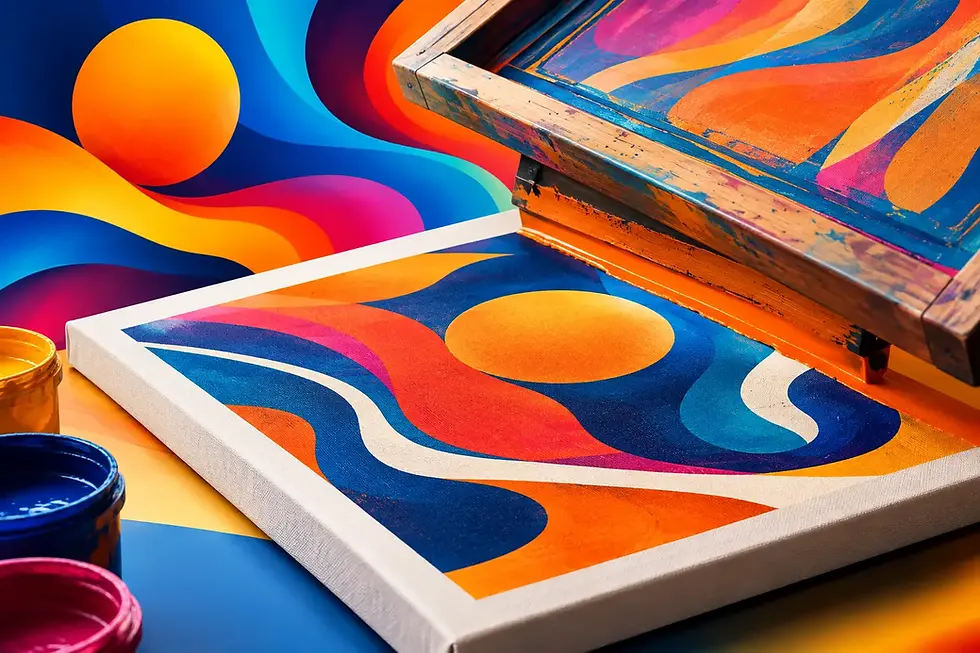
A luxury interior rewards close looking. Guests may first notice a painting from across the room, then stand in front of it with a glass in hand. At that distance, surface matters. Brushwork, layered paint, screen-print texture, edges, and small imperfections create a physical presence that a purely decorative print cannot always offer.
That is why it is worth understanding how a work was made. An original acrylic painting and a limited screen print can both have a place in a serious interior, but they offer different experiences. An original carries the direct marks of the artist and is singular by nature. A limited edition can be a smart choice when you want a specific image, a defined budget, or a cohesive series across multiple rooms.
Neither option is automatically better. The question is what you want the work to do. For the main wall in a living room, boardroom, or entry, an original may deliver the level of material depth the setting calls for. For a library, guest suite, or a smaller architectural niche, a limited edition can be equally convincing, particularly when it is well-produced and properly framed.
Contemporary work becomes more compelling when digital culture is not merely copied but translated through a real hand and process. That friction between a familiar image source and analog execution gives a piece staying power. It feels current without being disposable.
Give the Work Enough Air
One of the most common mistakes in high-end interiors is treating art as a final styling layer. The room is finished, every surface is occupied, and then a painting is squeezed into whatever wall remains. Great art deserves space around it.
Leave breathing room at the sides. Avoid crowding a major work with lamps, cabinets, plants, or objects that compete with it. If the art is large and direct, the surrounding furniture can be quieter. If the work is smaller or more detailed, lighting and a more intimate placement can help draw people toward it.
Lighting deserves real attention. Use dedicated art lighting or adjustable fixtures with high color rendering so the colors remain honest after sunset. Avoid harsh glare, especially on glass-framed works. Natural light can be beautiful, but prolonged direct sun is not a friend to most artworks. Placement should balance drama with care.
The center of a work is often placed near eye level, but architecture changes the rule. Over a console, above a fireplace, or along a stairwell, the composition of the entire wall matters more than a fixed measurement. If possible, tape out the artwork’s dimensions before committing. It is a simple move that prevents expensive guesswork.
Buy With Conviction, Not With Gallery Anxiety
Some buyers become cautious around art because they assume they need the right vocabulary or an expert’s permission. You do not. You need a clear eye, a feeling for your space, and enough information to understand what you are buying.
Buying directly from an artist can make that process more transparent. You can learn about the work’s technique, scale, edition, and motivation without the distance that sometimes surrounds the traditional gallery experience. At Carsten Breuer Arts, that direct connection is part of the point: a contemporary image may begin in the visual noise of the internet, but it is built into a physical work through acrylic, brushwork, and screen printing on canvas.
Of course, instinct should be supported by practical checks. Confirm dimensions, condition, edition details where relevant, framing requirements, and how the work will be installed. Think about the piece in morning light, evening light, and the way it will sit with the life of the room. A luxury interior is used, not preserved behind a rope.
The most memorable rooms are not the ones where every choice is universally approved. They are the ones where the art has enough presence to reveal the person who chose it. Pick the work that keeps pulling your attention back. Then give it the wall, the light, and the confidence it deserves.


Kommentare