


How to Commission Pop Art That Has Presence
A great commission should not feel like a decorated version of your favorite photo. It should feel like a work of art that happens to belong exactly where you live or work. That is the real answer to how to commission pop art: bring a clear point of view, give the artist room to work, and make decisions that hold up long after the first excitement of unboxing.
Pop art is built for presence. A portrait, a cultural reference, a car, a logo-like graphic, or a moment from your own life can become striking on canvas. But the strongest commissioned pieces do more than reproduce a subject. They translate it into color, scale, contrast, texture, and attitude.
Start with the feeling, not just the subject
People often begin with a request like, “I want a portrait of my dog,” or “I need something with a vintage Porsche.” That is a useful starting point, but it is not yet a brief. The more helpful question is what the painting should do in the room.
Do you want it to bring energy into a clean, quiet interior? Should it become the first thing people notice in a conference room? Are you after a personal memory, a piece of pop culture, or a visual statement that is deliberately provocative? The answer affects everything: the composition, the palette, the crop, and how much detail belongs on the canvas.
A strong artist can help turn a loose idea into an image. Still, you should arrive with a few honest instincts. Think about whether you are drawn to loud color or restrained tones, graphic contrast or painterly movement, irony or nostalgia. You do not need art-school vocabulary. You do need to know what feels like you.
How to commission pop art with a useful brief
A good commission brief is clear without becoming controlling. It gives the artist enough information to understand the assignment, while leaving room for the visual language that made you choose that artist in the first place.
Start with the subject and its personal relevance. Maybe it is an iconic musician who defined a period of your life, a portrait of someone close to you, a car that marks a milestone, or an image connected to your company. Then explain the mood you want: bold, elegant, raw, playful, dark, optimistic, or rebellious.
Reference images are helpful, especially for a specific person, vehicle, or moment. Send the best source material you have, not twenty nearly identical screenshots. Sharp, well-lit images make a difference when a portrait or object needs to be recognizable. If you are commissioning a piece based on a family photograph, say what matters about that photograph. Is it the expression, the era, the clothing, or the story behind it?
Also share images of the wall or room where the work will hang. This is not about making art disappear into the furniture. It is about understanding the light, surrounding colors, ceiling height, and viewing distance. A painting for a hallway needs different decisions than one for a double-height living room.
Name your non-negotiables
If there are elements that must appear, say so early. This could be a certain face, number, vehicle color, word, or background reference. The same goes for things you do not want: no text, no neon pink, no recognizable brand imagery, no overly polished look.
Be precise where precision matters. Then trust the artist with the rest. Asking an artist to copy another artist’s signature style is rarely a good route. Better results come from choosing someone whose existing work already has the energy, technique, and visual confidence you want.
Choose scale before you choose details
Scale is one of the most common mistakes in art buying. People imagine a large statement piece, then choose a smaller format because it seems safer. On the wall, it can look hesitant.
Measure the available space and mark out the canvas size with painter’s tape. Step back to the distance from which you will actually see it. If the painting is meant to lead the room, give it enough physical authority to do that. Pop art thrives on scale because its visual language is direct, graphic, and meant to register quickly.
That does not mean bigger is always better. A small, concentrated work can be powerful in an intimate space or as part of a collection. It depends on the architecture and on the role the piece should play. But if you want a single work above a sofa, sideboard, reception desk, or dining table, undersizing it is usually the bigger risk.
Format matters too. A square canvas feels stable and iconic. A vertical format can intensify a portrait. A wide horizontal canvas gives cars, groups, and cinematic scenes room to breathe. Let the subject and the wall work together rather than forcing every idea into the same shape.
Talk openly about color and contrast
Color is not decoration in pop art. It is part of the message. Acid yellow can create tension. Saturated red can bring heat and drama. Black-and-white contrast can make a portrait feel sharper, cooler, or more confrontational. Layered color can turn a familiar face into something unexpected.
If you need the artwork to sit within an existing interior, share that information. But avoid treating the commission like a fabric swatch exercise. A painting does not need to match every cushion or chair. Often, the right piece adds a controlled interruption to the room. It gives the space a pulse.
The strongest approach is to identify two or three colors you love or need to avoid, then allow the artist to build the rest of the palette. An experienced painter understands when a color needs to dominate, when it should sit in the background, and where a small accent can change the whole image.
Understand process, materials, and originality
Before commissioning, ask how the artist develops the work. This matters because a digital mockup, a printed image, and a hand-painted canvas are not interchangeable things. They carry different surfaces, different imperfections, and different energy.
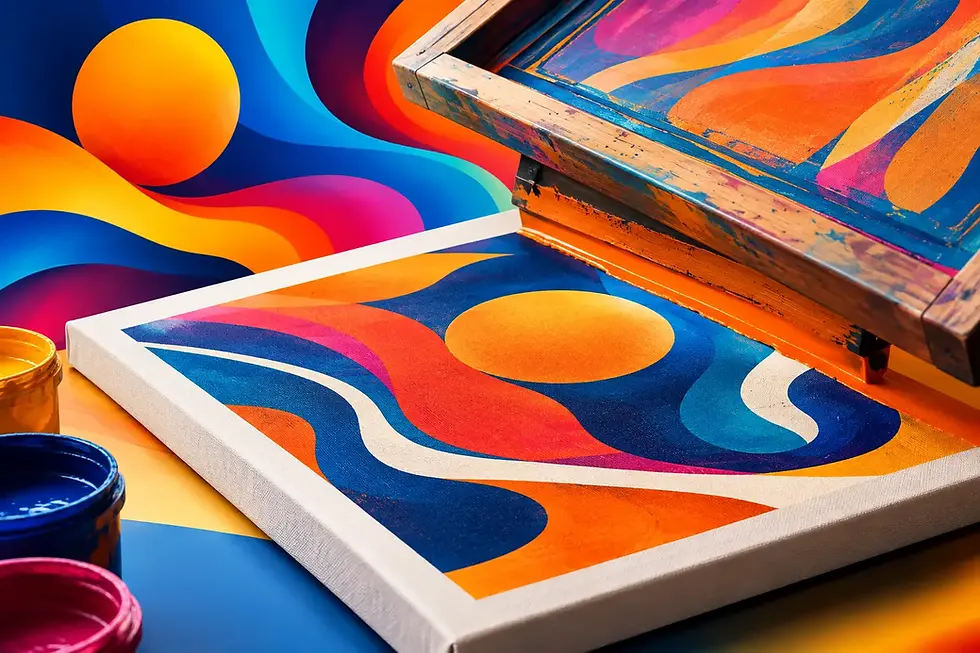
At Carsten Breuer Arts, digital source worlds are translated into large-scale analog works using brushwork, acrylic paint, and screen-printing on canvas. That combination matters: the graphic precision of a screen-printed element can push against painted gestures, layered color, and visible handwork. The result is not simply an image transferred onto a surface. It is a physical object with its own rhythm.
Ask whether you will see a concept or preliminary direction before production begins, how feedback is handled, and which changes are realistic at each stage. Early feedback is useful. Major changes once a complex work is underway may alter the timeline, cost, or even the integrity of the composition.
You should also clarify whether the commission is a one-of-one original, whether an edition is possible, and what documentation comes with the work. These questions are practical, not pretentious. They help you understand what you are buying and why it has value.
Set a budget that matches the ambition
Commission pricing is shaped by size, complexity, materials, technique, framing, and the artist’s time. A large portrait with several screen-printed layers and detailed hand painting takes more than a simple graphic composition. Tight deadlines can also affect what is feasible.
Be direct about your budget from the beginning. It saves time and often leads to smarter creative choices. If the first idea exceeds the budget, you may be able to adjust the size, simplify the background, or focus the composition on one powerful motif rather than several competing ones.
The cheapest route is rarely the one you remember. What lasts is a work with conviction: the right scale, a subject that means something, and an artist whose hand is visible in the final piece.
Let the artist make the painting
A commission is a collaboration, not a committee project. You bring the story, the space, and the reason the work should exist. The artist brings composition, technique, visual judgment, and the courage to make choices you may not have considered.
The best time to commission is when an image keeps returning to you, not when you are trying to fill an empty wall quickly. Give that idea a strong format, a clear brief, and enough freedom to become art. Then you will not just own a personal image. You will live with a piece that keeps saying something back.


Kommentare